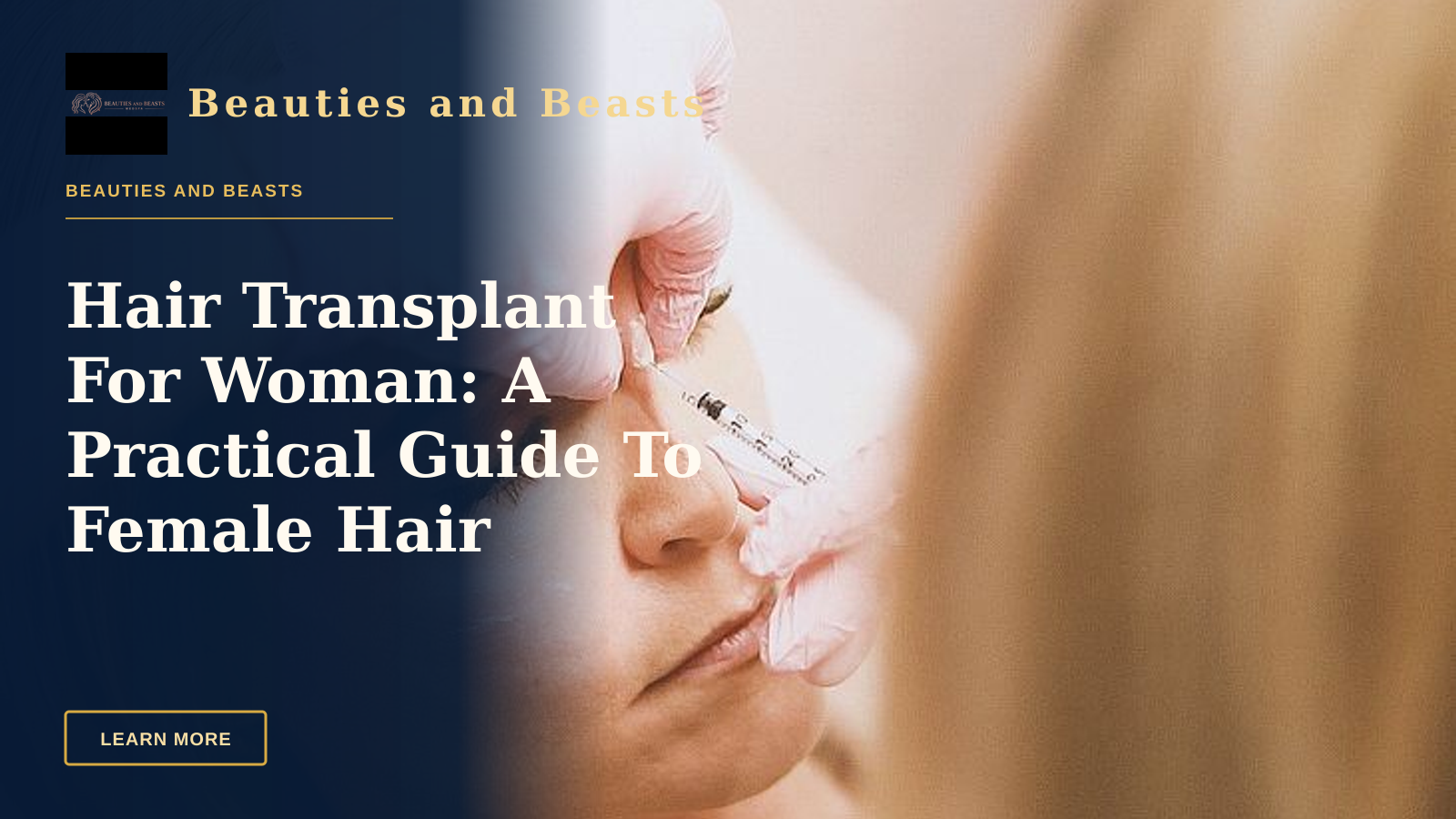
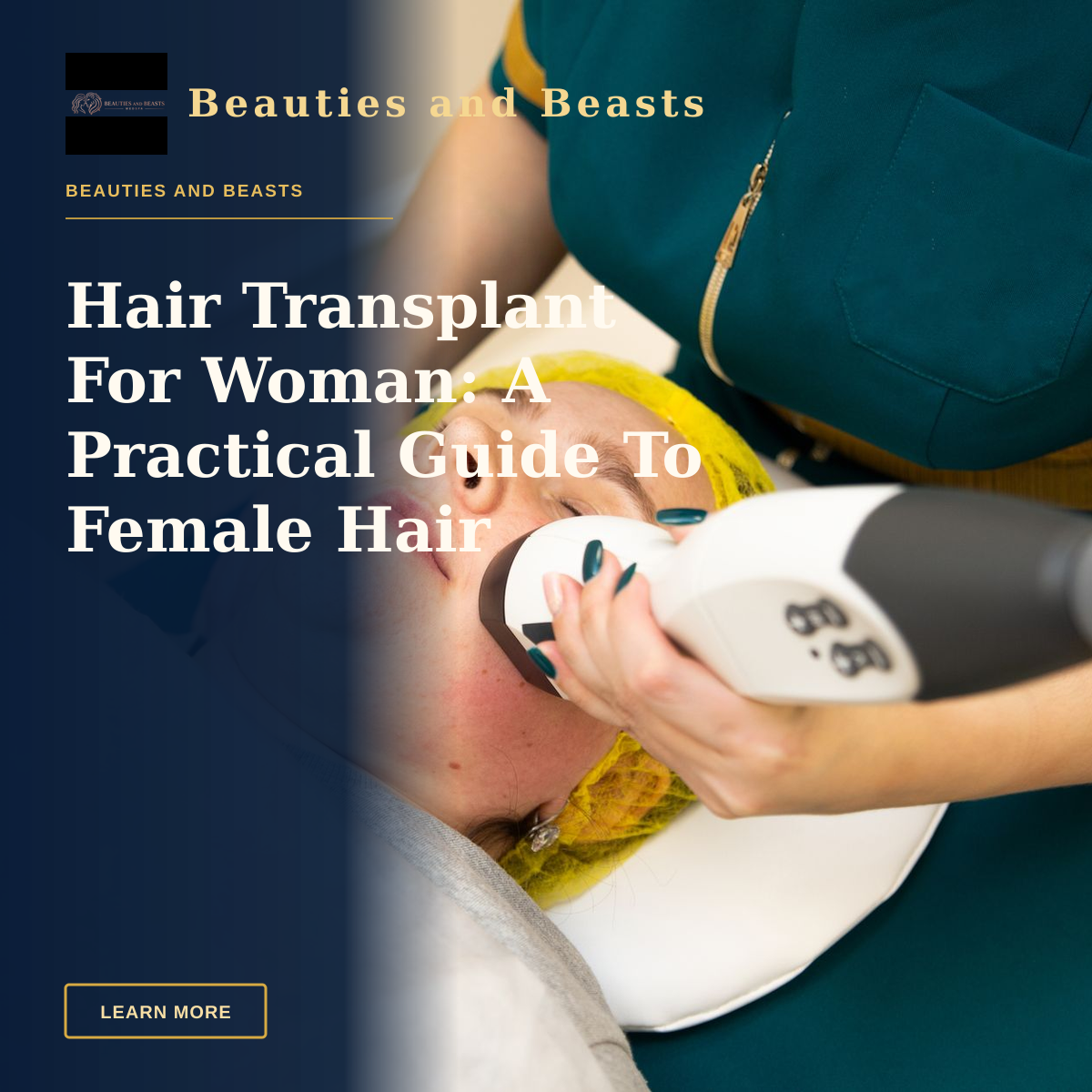
Searching for a hair transplant for woman? This guide explains what a female hair transplant is, how it differs from male procedures, and what to expect from consultation through recovery. If you’re exploring options for thinning or patterned hair loss, you’ll find clear steps to evaluate candidacy, compare surgical and non‑surgical approaches, and plan a personalized program.
Beauties and Beasts Med Spa combines surgical and noninvasive hair solutions—including FUE hair transplantation and InFuze TED acoustic regrowth therapy—plus regenerative options such as PRF and MSC Exosomes to support hair restoration in women. The clinic emphasizes data‑driven personalization using FlowMediQ AI Facial Analysis and on‑site skin/hair mapping so treatment plans are matched to anatomy and measurable goals. Read on to learn how a hair transplant might fit your goals, what the patient journey looks like, and practical next steps if you’re ready to pursue female hair restoration.
Patient Journey & Consultation
Choosing a hair transplant for a woman begins with a structured, evidence‑based consultation. At consultation we review medical history, perform a clinical scalp exam, and use diagnostics to measure thinning and donor reserve. You can schedule a complimentary consultation by phone or online; many patients start by uploading photos or using an AI pre‑scan to accelerate planning.
We use FlowMediQ AI scans to capture objective metrics in under two minutes, and combine that data with physician assessment to create a clear plan. Initial visits focus on identifying the pattern and cause of hair loss (e.g., female pattern hair loss, traction alopecia, post‑partum shedding) and whether a surgical transplant, non‑surgical regrowth, or multi‑modal program is most appropriate.
Typical consultation steps include a review of expectations, photographic documentation, and a discussion of timelines and financing. If surgery is chosen, the team explains donor site planning, expected graft counts, and recovery. If non‑surgical therapy is chosen first, we outline a course of PRF, topical or systemic medical therapy, and device protocols.
- Schedule: call (303) 933‑8526 or request a complimentary consult online.
- Diagnostics: FlowMediQ AI scan (<2 minutes) plus targeted photos.
- Plan: tailored sequence—medical therapy, PRF/Exosomes, InFuze TED, or FUE transplant.
- Follow‑up: documented outcomes with repeat scans and routine post‑procedure checks.
After the consult you’ll receive a written plan that includes procedure durations (neurotoxin visits: 15–20 minutes; ClearLift sessions: under 30 minutes; custom facials: 45–60 minutes), an estimated timeline for visible results, and options for financing or staging treatments. You may be advised to try non‑surgical regrowth modalities or PRF before committing to transplantation depending on your diagnosis and donor reserve. To book your consult, use our online booking page or call the clinic.
Beauty & Wellness, Right at Your Fingertips
Download the Beauties and Beasts App and start earning, saving, and feeling your best.
Get more from your Beauties and Beasts experience with our app. Earn rewards with every visit, discover personalized treatment recommendations, schedule appointments, shop your favorite products and services, and enjoy exclusive discounts and special offers available right in the app.
Click to get $50 off your first purchase!How To Decide If A Hair Transplant For Woman Is Right For You
Female hair loss has different patterns and causes than male balding. Determining suitability for a hair transplant requires examining the type of hair loss, the stability of loss over time, and the quality and quantity of donor hair. Women with diffuse thinning and inadequate donor areas may be better served initially by medical therapies and regenerative approaches rather than immediate transplantation.
Key decision factors include age, diagnosis (androgenetic alopecia vs. other causes), donor hair density, hair texture, and your goals for hairline restoration or density improvement. A good consultation will also discuss non‑surgical options that can be combined with or staged before surgery to optimize outcomes.
Non‑surgical approaches commonly used for women include platelet‑rich fibrin (PRF) microneedling, scalp PRF injections, MSC Exosomes, and acoustic therapies such as InFuze TED. These treatments can increase scalp vascularity and hair shaft thickness and are often paired with topical or oral medical therapies. For women who are appropriate surgical candidates, FUE (Follicular Unit Excision) transplants can deliver permanent, natural‑looking density when planned and executed with attention to female hairline aesthetics.
Ready to take the next step?
Book a Free ConsultationServices & Procedures
Beauties and Beasts Med Spa offers a comprehensive, integrated med‑spa and wellness menu that pairs aesthetic procedures with medical programs and regenerative therapies. If you are researching a hair transplant for a woman, we provide both surgical FUE and multiple noninvasive hair restoration options, plus adjunctive regenerative care to support graft survival and scalp health. You can view the full service list on our services page.
Below is an enumerated snapshot of services particularly relevant to female hair restoration and supportive wellness treatments:
- FlowMediQ AI Facial Analysis — in‑clinic skin mapping to inform overall facial and scalp planning.
- FUE (Follicular Unit Excision) hair transplantation for permanent restoration.
- InFuze TED noninvasive acoustic hair regrowth therapy (no needles, no downtime).
- PRF Treatments — scalp PRF and PRF microneedling to stimulate local regeneration.
- MSC Exosomes as a regenerative adjunct to promote tissue support.
Other offerings that are commonly integrated into hair restoration plans include IV nutrition to support cellular recovery, hormone replacement (BHTRT) and medically supervised weight programs if systemic factors are present, and dermatologic procedures (DYE‑VL, Opus Plasma, RF microneedling) to address scalp and skin health. For specific injectables and aesthetic services that may accompany facial framing with hair restoration, see our pages on Dermal Fillers and Botox in Littleton, CO.
Why offer 50+ integrated services? Hair restoration in women often benefits from a multi‑disciplinary approach—medical, surgical, and regenerative—to address both visible density and the biologic environment that sustains hair growth. Our clinicians outline timing and sequencing during your consultation so you understand what to expect from each step.
A Complete Approach to Beauty & Wellness
Explore Our Services
We believe beauty and wellness are interconnected, which is why we offer a comprehensive range of aesthetic, wellness, body contouring, and hair restoration services under one roof. From skin rejuvenation and injectables to hormone therapy, weight management, IV therapy, and hair restoration, our approach allows us to create personalized treatment plans based on each client's unique goals—not a one-size-fits-all solution.
Explore Our ServicesComparing FUE Surgery, PRF, and Non‑Surgical Regrowth
For many women, the central choice is between FUE transplantation and a course of non‑surgical regrowth strategies. FUE transplants move permanent follicular units from the donor area to thinning zones and are best for patients with stable hair loss and adequate donor supply. Non‑surgical approaches—PRF, MSC Exosomes, InFuze TED, topical/oral medications—can improve thickness and stimulate dormant follicles and are often used when donor hair is limited.
Consider this when comparing options:
- FUE: permanent redistribution of your hair; surgical recovery and careful donor planning required.
- PRF/Exosomes: regenerative, autologous or biologic adjuncts that can improve graft take and scalp health.
- InFuze TED and device therapies: repeatable, low‑risk protocols for incremental improvement without surgery.
Some patients follow a staged strategy: start with PRF/Exosomes and device therapy to maximize existing hair, then proceed to FUE if adequate improvement is not achieved. During your consultation we map donor potential and recommend the least invasive effective approach.

Want personalized advice?
Schedule Your AssessmentTechnology & Technique
Delivering predictable results for a hair transplant for a woman requires a portfolio of devices and biologics that can be precisely matched to anatomy. We use FlowMediQ AI Facial Analysis for objective baseline mapping and combine it with in‑clinic platforms to customize depth, energy, and biologic support. Learn more about our full services on the services page.
Key technologies and how they’re used:
- FlowMediQ AI Facial Analysis — rapid mapping of skin and facial metrics to guide aesthetic planning and track changes.
- InFuze TED — acoustic hair regrowth therapy that can be used as a noninvasive option or adjunct to surgical plans.
- PRF & MSC Exosomes — in‑house PRF processing for scalp and graft support; Exosomes used for regenerative signaling.
- Alma Opus Colibri & Opus Plasma — RF microneedling for delicate areas and plasma resurfacing to improve scalp skin quality when indicated.
We select devices such as Harmony® XL PRO / ClearLift and DYE‑VL for managing scalp pigmentation and vascular lesions that can affect perceived density. For body and facial balancing adjacent to hair restoration, platforms like T‑Shape 2 and TruBody/truSculpt provide contouring options when needed. Using this inventory allows us to titrate interventions—surgical, device, and biologic—so plans are individualized and measurable.
Beauty Has Its Rewards
Get the App
Download our rewards app, earn points, unlock exclusive perks, and get rewarded for taking care of yourself.
Get the AppRecovery, Expectations, and Long‑Term Care
Recovery after a female FUE transplant typically involves a few days of local tenderness and mild swelling; grafts adhere quickly and most patients return to non‑strenuous activity within a week. Visible regrowth from transplanted follicles usually begins at ~3–4 months, with measurable density and maturation by 9–12 months. Non‑surgical treatments like PRF and InFuze TED require a series of sessions and maintenance treatments for sustained benefit.
Expectations should be realistic and individualized: transplants increase density where donor hair is placed, but multiple sessions may be needed for diffuse loss. Follow‑up care commonly includes topical or oral medical therapy, maintenance PRF or Exosome sessions, and repeat FlowMediQ scans to monitor progress. The clinic provides a documented aftercare plan and routine follow‑ups to adjust maintenance as needed.
See how we can help you
Get Started TodayEvidence & Safety Considerations
Hair transplantation and adjunctive regenerative therapies are established practices when performed by trained teams. Safety relies on proper patient selection, sterile technique, and transparent informed consent. PRF is autologous (derived from your own blood) and is processed in‑house; MSC Exosomes are used as a regenerative support when clinically appropriate. Device protocols are selected to avoid overlapping energy in sensitive zones and to protect grafts during combined treatments.
If you have active scalp disease, poorly controlled medical issues, or insufficient donor hair, the team will recommend alternative or preparatory treatments rather than immediate surgery. A careful medical history and pre‑procedure assessment help minimize risks and set realistic timelines for outcomes.
Practical Next Steps
If you’re considering a hair transplant for a woman, begin with a complimentary consultation to evaluate diagnosis and donor reserve. Bring recent photos showing the top, hairline, and donor area; if you prefer, start with an AI pre‑scan so clinicians have baseline metrics before your visit.
Useful starting links and tools:
- Graft and Cost Calculator — estimate graft needs and staging considerations.
- Non‑Surgical Hair Regrowth — explore device and PRF options to complement or postpone surgery.
- Female Hair Transplant — external resource focusing on female‑specific planning and aesthetics.
- Hair Transplant — overview of surgical planning and donor mapping.
When you’re ready, schedule a complimentary consultation by calling (303) 933‑8526 or using the online booking link referenced earlier. A data‑driven consult reduces uncertainty and outlines a clear path—whether that’s a staged non‑surgical plan, immediate FUE, or combined regenerative approach.
Conclusion
A hair transplant for a woman can be a lasting solution when candidacy is evaluated carefully and treatment is tailored to female hair loss patterns. The best outcomes come from combining accurate diagnostics (FlowMediQ AI scans and clinical mapping), a clear plan for donor management, and complementary regenerative care such as PRF or MSC Exosomes when appropriate. Non‑surgical options like InFuze TED and device protocols can deliver meaningful improvement for many women and are often used in combination or as an initial strategy.
If you’re considering restoration, start with a complimentary consultation to establish diagnosis, map donor potential, and review staged options. A transparent plan will include timelines, likely outcomes, aftercare, and follow‑up monitoring so you understand the path to natural, lasting density.
Primary next step: book a complimentary consultation or call (303) 933‑8526 to discuss whether a hair transplant for a woman is right for you.
FAQ
Will a hair transplant work for female pattern hair loss?
It can when donor hair is sufficient and the loss pattern is stable. Many women benefit from a combined approach—medical therapy, PRF/Exosomes, and device treatments—either before or alongside FUE. A diagnostic consult will clarify whether transplant is the appropriate next step.
What is recovery like after FUE?
Most patients experience mild tenderness and should expect 5–10 days of visible scabbing. Light activity is usually resumed quickly; full cosmetic maturation of transplanted hair often takes 9–12 months.
Are non‑surgical options effective?
Yes—PRF, InFuze TED, and device therapies can improve thickness and scalp health. They are lower risk and often used as part of a staged plan. Your clinician will recommend the least invasive option likely to meet your goals.
Locations & Access
Beauties and Beasts Med Spa practices from a single, full‑service clinic in Ken Caryl (Littleton) and serves the southwest Denver metro area. You can reach the clinic by phone, email, or online booking to request a complimentary consultation or AI pre‑scan.
Contact and access details:
- Clinic address — 10354 W. Chatfield Ave, Suite 203, Littleton, CO 80127
- Phone — (303) 933‑8526
- Email — [email protected]
- Hours — Mon–Fri: 9:00 AM – 5:00 PM; Sat: By Appointment Only; Sun: Closed
We offer virtual and AI access pathways: upload photos for a FlowMediQ AI pre‑scan or request a complimentary remote consult to jump‑start planning. Booking and pre‑visit forms are available on our Contact page; staff can assist with financing options and pre‑procedure instructions.
- Book a complimentary consultation by phone or through our Contact Us page.
- Use the rewards app to manage appointments, earn points, and access promotions.
- Bring current photos or request an AI pre‑scan to speed planning.
We aim to make access seamless: call for same‑week availability when possible, or use online booking to reserve a consult. Every patient receives a personalized plan and clear pre/post instructions before scheduling.
Next Step
Locations & Access
Discover how our team can help you take the next step with confidence.
Contact UsMedical Information Disclaimer
This content is provided for general educational purposes only. It is not a substitute for professional advice, diagnosis, or treatment. Readers are advised to consult qualified professionals for personalized recommendations.
Explore more insights on our blog or schedule a consultation.
Have questions? We have answers.
Speak With an Expert