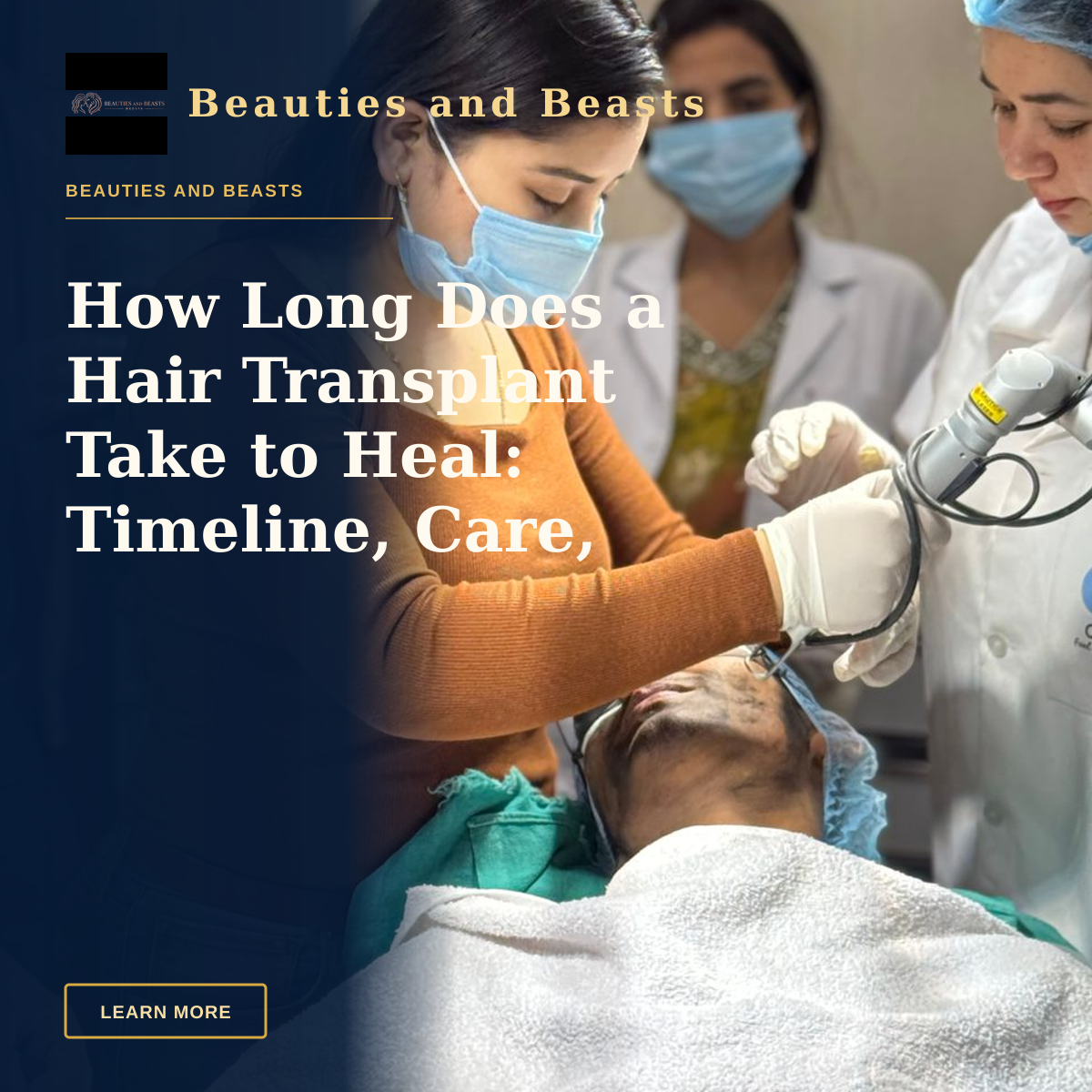
If you’re asking how long does a hair transplant take to heal, you want a clear, practical timeline and realistic expectations so you can plan recovery and judge results. Healing after a hair transplant follows predictable stages: an immediate wound‑care phase, a short period of scabbing and shedding, then gradual regrowth that continues for many months. How fast you move through those stages depends on the procedure (surgical FUE vs non‑invasive therapies), how your body responds, and the post‑op care you follow.
At an integrated clinic like Beauties and Beasts Med Spa in Ken Caryl (Littleton, CO), we combine surgical FUE options with non‑surgical hair regrowth therapies (InFuze TED, scalp PRF) and data‑driven diagnostics to plan and track recovery. This article lays out typical timelines for healing, step‑by‑step aftercare tips to support a smooth recovery, how to recognize normal vs abnormal signs, and when a follow‑up is recommended. Use this as a clinician‑informed roadmap to help you understand what to expect and how to make decisions about timing, follow‑up, and adjunctive treatments.
Patient Journey & Consultation
Booking your consultation starts the recovery plan as much as the surgery itself. Call (303) 933‑8526 or request a complimentary consult via our Contact page or online booking to begin. Before any procedure we collect a medical history, review goals, and use objective diagnostics—FlowMediQ AI Facial Analysis is available in‑clinic to map skin and donor/recipient areas and can be completed in under two minutes. That data helps us choose the right combination of surgical and non‑surgical options and set realistic timelines for healing.
During the complimentary consultation (in‑clinic or via our AI pre‑scan), we outline a custom treatment plan: expected procedure duration, typical recovery landmarks, pricing framework, and financing options. For surgical FUE, we explain how donor harvesting and graft placement are performed and what to expect in the first two weeks; for non‑surgical pathways (PRF, InFuze TED) we explain session frequency and typical timelines for visible improvement.
On treatment day we follow sterile technique, topical numbing where appropriate, and documented in‑house processing for PRF when used. After the procedure you will receive written and verbal aftercare instructions, and we schedule routine follow‑ups. Note that neurotoxin patients receive a complimentary two‑week check; similar post‑op follow‑up is routine for surgical procedures to review healing and answer questions.
Key practical steps during the journey include:
- Pre‑visit diagnostics (FlowMediQ scan & photos) to create a baseline and objective goals.
- A clear, written treatment and recovery timeline given at the consult, including restrictions and follow‑up schedule.
- In‑clinic processing for regenerative biologics (PRF) when indicated, so you can combine grafting or microneedling with biologic support.
We recommend booking your complimentary consultation through our online booking system so we can reserve time for a thorough planning visit and, when appropriate, arrange same‑week surgical dates or pre‑op clearances.
Beauty & Wellness, Right at Your Fingertips
Download the Beauties and Beasts App and start earning, saving, and feeling your best.
Get more from your Beauties and Beasts experience with our app. Earn rewards with every visit, discover personalized treatment recommendations, schedule appointments, shop your favorite products and services, and enjoy exclusive discounts and special offers available right in the app.
Click to get $50 off your first purchase!Typical Healing Timeline: What to Expect Week‑by‑Week
Whether you choose surgical FUE or a non‑surgical hair restoration pathway, healing follows phases that are useful to plan around. Below is a clinician‑oriented, commonly accepted timeline that helps most patients anticipate milestones; individual variation is normal and your surgeon or provider will tailor instructions to your situation.
Immediate (Day 0–3)
Right after graft placement you’ll see pinpoint graft sites and mild swelling. The team applies protective dressings and provides instructions for gentle cleaning. Pain is usually mild and controlled with prescribed or over‑the‑counter medication as advised. Avoid touching grafts and follow the sterile cleansing routine supplied by your provider.
Early Healing (Days 4–14)
Scabbing and crusts form around grafts; these typically begin to loosen and fall away between one and two weeks. You may be advised to avoid direct water pressure on the grafts (use gentle dabbing or a cup rinse technique) and to keep strenuous activity and heavy bending to a minimum to reduce swelling and bleeding risk. Most patients can return to light, non‑sweaty activities after about 7–10 days, but check with your surgeon for personalized timing.
Shedding Phase (Weeks 2–12)
It’s common for transplanted hairs to temporarily shed (known as shock loss) in the weeks following surgery; this is expected and does not mean the grafts failed. Regrowth typically begins between 3–4 months for many patients, with noticeable thickening by months 6–9. Patience is essential—full cosmetic results commonly take up to 9–12 months after surgery for most people.
Longer Term (3–12 months)
New hair shafts mature and thicken over this period. Follow‑up visits include photographic documentation and, in some cases, FlowMediQ‑assisted progress mapping to quantify improvement. If adjunctive therapies (PRF, InFuze TED, topical regimens) are planned, these are typically introduced during recovery to support graft survival and anagen activation.
Ready to take the next step?
Book a Free ConsultationServices & Procedures
Beauties and Beasts Med Spa provides an integrated med‑spa and wellness menu that pairs aesthetic procedures with medical programs and regenerative therapies to support hair restoration and overall recovery. We offer both surgical and non‑surgical hair restoration options plus adjunctive biologic support to help optimize healing and long‑term results. Every plan begins with diagnostics and a complimentary consultation so you understand timelines, aftercare, and follow‑up obligations.
Our comprehensive service list includes surgical FUE hair transplantation as well as multiple supportive and cosmetic services so you can consolidate care in one clinic. We apply data‑driven personalization using on‑site FlowMediQ scans and in‑clinic progress tracking.
- Immediate diagnostics: FlowMediQ AI Facial Analysis for objective mapping and planning.
- Surgical and non‑surgical hair solutions: FUE transplantation and InFuze TED acoustic regrowth.
- Regenerative biologics and recovery support: PRF services and MSC Exosomes to aid healing.
Below is the full, enumerated treatment menu and practical timing details we follow. Treatment selection depends on anatomy, goals, and healing priorities; we review timing at consultation and provide clear pre/post instructions so you know exactly what to expect.
Services & Procedures — our complete menu includes (selected items shown):
- FlowMediQ AI Facial Analysis (in‑clinic skin mapping)
- Complimentary consultations (in person or via AI Skin Analysis)
- Cosmetic neurotoxin injections: Botox® injections
- Cosmetic neurotoxin injections: Dysport® injections
- Cosmetic neurotoxin injections: Jeuveau® injections
- Cosmetic neurotoxin injections: Letybo® injections
- Neurotoxin procedures for aesthetic/functional uses (brow lift, lip flip, jaw slimming, masseter treatments, hyperhidrosis)
- Dermal fillers (FDA‑approved HA fillers using Juvéderm® and Restylane®)
- Lip enhancement (dermal filler)
- Cheek augmentation (dermal filler)
- Jawline & chin contouring (dermal filler)
- Under‑eye (tear trough) filler
- Nasolabial fold treatment (dermal filler)
- Marionette line treatment (dermal filler)
- PRF Treatments: facial PRF injections
- PRF microneedling facials
- PRF for hair restoration (scalp PRF)
- PRF joint injections
- MSC Exosomes regenerative therapies
- Sexual wellness PRF shots: He‑Shot (men)
- Sexual wellness PRF shots: V‑Shot (women)
- FUE (Follicular Unit Excision) hair transplantation
- InFuze TED noninvasive hair regrowth therapy
- Custom medical‑grade facials (45–60 minutes)
- Mini express facials (25 minutes)
- LMNT Red/Infrared LED light therapy (adjunct to facials)
- Chemical peels (VI Chemical Peels — Purify, Precision + peptides)
- RF microneedling (including Colibri technology for delicate areas)
- Alma Opus Colibri treatments
- Alma Opus Plasma (Opus Plasma) advanced plasma resurfacing
- ClearLift (Harmony® XL PRO by Alma® fractional laser) — <30 minutes
- Dye‑VL photofacials (IPL)
- Tattoo & PMU removal (Dye‑VL and Li‑FT® saline removal)
- Laser skin resurfacing
- Pigmentation correction (laser/IPL protocols)
- Vascular lesion treatments
- Laser hair removal (Harmony XL PRO referenced)
- Body contouring: T‑Shape 2 sculpting system
- Body contouring: TruBody non‑invasive sculpting
- truSculpt treatments
- truFlex treatments
- PDO thread lifts and meshing techniques
- Sclerotherapy for spider veins
- Spider vein treatments (DYE‑VL and sclerotherapy)
- IV Nutrition & Hydration: B‑Lean, Recovery & Performance, Immunity, High‑Altitude
- IV add‑ons and injections: L‑Glutathione, MICC Lipo + B12, IM injections
- Hormone replacement therapy (BHTRT)
- Medically supervised weight loss programs including GLP‑1 peptide therapy
- Medical‑grade skincare and customized skincare regimens
- Acne treatments (DYE‑VL, ClearLift, Opus Plasma, RF microneedling, Hydrofacials)
- Lash & brow services: lash lifts, lash tints, brow tints, brow lamination, waxing
- Tattoo & Permanent Makeup (PMU) removal services
- Complimentary two‑week neurotoxin follow‑up and routine aftercare guidance
- Patient financing options and Beauties & Beasts Rewards App loyalty program
Operational timing and typical durations: FlowMediQ scans take under two minutes, neurotoxin appointments are typically 15–20 minutes with onset in 3–7 days and full effect at ~2 weeks, ClearLift sessions are under 30 minutes, and custom facials run 45–60 minutes (mini 25 minutes). We pair diagnostics with procedure‑level timelines during every consultation so you know what to expect. For details or to schedule, visit our services page.
A Complete Approach to Beauty & Wellness
Explore Our Services
We believe beauty and wellness are interconnected, which is why we offer a comprehensive range of aesthetic, wellness, body contouring, and hair restoration services under one roof. From skin rejuvenation and injectables to hormone therapy, weight management, IV therapy, and hair restoration, our approach allows us to create personalized treatment plans based on each client's unique goals—not a one-size-fits-all solution.
Explore Our ServicesHow to Support Faster, Safer Healing
Good post‑op care has a meaningful effect on graft survival and the speed of visible recovery. The following practices are routinely recommended by surgeons and restoration clinicians and are part of our standard aftercare counseling.
- Follow wound care instructions: gentle cleansing, no picking at scabs, and prescribed topical or oral meds as directed.
- Avoid strenuous exercise and heavy sweating for the period your surgeon recommends (commonly 7–14 days for surgical cases).
- Sleep with head elevation for the first few nights to reduce swelling and avoid pressure on grafts.
- Avoid direct sun exposure on the grafted area until fully healed; use protective clothing and sunscreen once allowed.
- Consider adjunctive therapies (PRF, InFuze TED, topical regimens) as advised to support regrowth and tissue health.
If you smoke or use nicotine products, plan to stop before and after surgery—tobacco reduces blood flow and can impair healing. Discuss medications with your provider; some blood thinners and supplements are paused pre‑op to lower bleeding risk. Our team offers financing and stepwise treatment plans so you can combine immediate needs with long‑term regenerative support.
Want personalized advice?
Schedule Your AssessmentTechnology & Technique
Predictable healing and reliable outcomes start with precise technique and the right devices. We deploy a curated technology portfolio so clinicians can match energy depth, biologic stimulus, and surgical technique to each patient's anatomy and recovery goals. For hair restoration that may mean combining surgical FUE with regenerative PRF or non‑invasive InFuze TED therapy.
Key platforms and tools we use include:
- FlowMediQ AI Facial Analysis — rapid, real‑time skin mapping that helps with baseline documentation and tracking improvements in skin and donor area quality (scan <2 minutes).
- Harmony® XL PRO / ClearLift — fractional laser options for skin resurfacing that complement scalp protocols when indicated; ClearLift sessions <30 minutes.
- DYE‑VL — IPL for vascular and pigment concerns that can affect overall scalp/skin health.
- LMNT Red/Infrared LED — adjunct light therapy to support cellular renewal during facials and scalp treatments.
- Alma Opus Colibri & Opus Plasma — RF microneedling and plasma resurfacing for targeted collagen stimulation and texture improvement.
- InFuze TED — acoustic, noninvasive hair regrowth therapy that pairs well with PRF and topical regimens for patients seeking needle‑free options.
- PRF & MSC Exosomes — autologous PRF and exosome biologics to support tissue regeneration, graft take, and joint/sexual wellness protocols.
We select technology based on objective diagnostics and clinical judgment. For delicate periocular or scarred areas we may choose Opus Colibri for RF microneedling; for diffuse thinning we may layer InFuze TED with scalp PRF to encourage regrowth while limiting downtime. Learn more about our full services at our services page and about specific device options including Alma Opus Colibri and Alma Opus Plasma.
Beauty Has Its Rewards
Get the App
Download our rewards app, earn points, unlock exclusive perks, and get rewarded for taking care of yourself.
Get the AppComparing Healing: Surgical FUE vs Non‑Surgical Options
Surgical FUE involves donor harvesting and graft placement, which means an initial wound‑healing phase and scab formation; the visible recovery window is typically the first two weeks, while final results appear over many months. Non‑surgical therapies such as InFuze TED, topical regimens, or serial PRF sessions usually have much shorter immediate downtime but require multiple sessions and patience for gradual improvement.
If your priority is minimal downtime, non‑surgical hair regrowth may allow you to continue normal activities within a day or two, but the trade‑off is that non‑surgical routes often produce incremental improvement rather than the fuller immediate density that transplantation provides. For some patients we combine both approaches: surgical grafting to restore density plus PRF or InFuze TED to accelerate healing and support native follicles.
For procedure details and patient stories, consider reviewing our surgical hair transplant overview at FUE Hair Transplants — Ken Caryl and non‑surgical options at Non‑Surgical Hair Regrowth. For cost estimates or graft calculators, the FUEsion Graft and Cost Calculator can help provide a starting point: Graft and Cost Calculator. To read reviews from patients who’ve had similar procedures, see: Hair Transplant Reviews.
See how we can help you
Get Started TodayWhen To Contact Your Provider
Normal healing includes mild pain, scabbing, transient swelling, and some shedding. Contact your provider promptly if you experience any of the following: persistent or worsening pain unrelieved by medication, signs of infection (increasing redness, warmth, pus), heavy bleeding, or grafts that appear to be detaching in large numbers in the immediate post‑op window. We encourage patients to use scheduled follow‑ups to address concerns early—timely intervention can often prevent complications from affecting final results.
Conclusion
So, how long does a hair transplant take to heal? Expect an initial wound‑care phase and scabbing that typically resolves within 7–14 days, a shedding phase over the next several weeks, and progressive regrowth that commonly becomes noticeable after 3–4 months with continued maturation up to 9–12 months. Non‑surgical alternatives have shorter immediate downtime but typically require multiple sessions and a longer cumulative timeline to show comparable improvements. Your exact healing path depends on procedure type (surgical FUE vs non‑surgical), anatomy, and post‑op care.
If you’re considering restoration, start with a complimentary consult so a clinician can assess donor density, scalp quality, and goals; at Beauties and Beasts Med Spa we pair FlowMediQ diagnostics, surgical FUE options, and regenerative adjuvants like PRF and MSC Exosomes to create evidence‑informed plans and track progress. Book a consult to get a personalized timeline and a clear aftercare roadmap before you commit.
Primary next step: schedule a complimentary consultation or request an AI pre‑scan so we can produce a data‑driven plan and expected recovery timeline tailored to your anatomy.
FAQ
How soon can I wash my hair after a transplant?
Providers commonly recommend gentle cleansing after the first 24–48 hours using a prescribed technique (dabbing or cup rinses) to avoid dislodging grafts. Follow your surgeon’s specific instructions for timing and method.
Will the transplanted hair fall out before it grows back?
Yes — temporary shedding of transplanted hair (shock loss) is common within the first weeks. This is an expected part of the cycle; the grafts typically enter a new growth phase months later and produce lasting hair.
How long before I can exercise?
Most surgical patients avoid heavy lifting, vigorous cardio, and activities that cause sweating for 7–14 days. Light walking is usually encouraged early, but confirm timing with your surgeon based on the specific procedure.
Can non‑surgical therapies speed healing?
Adjuncts like PRF and InFuze TED are used to support tissue health and promote regrowth; these are often introduced during recovery when clinically appropriate. Discuss combined protocols at your consultation.
Locations & Access
We are a single, full‑service Ken Caryl Littleton clinic serving the southwest Denver metro area. Our practice is designed to make access simple whether you prefer an in‑person visit or an AI‑assisted remote consult. Call or use our Contact page to request appointments, upload photos for a pre‑scan, or learn about financing options.
- Clinic address — 10354 W. Chatfield Ave, Suite 203, Littleton, CO 80127
- Phone — (303) 933‑8526
- Email — [email protected]
- Hours — Mon–Fri: 9:00 AM – 5:00 PM; Sat: By Appointment Only; Sun: Closed
- Virtual & AI access — complimentary consultations in person or via FlowMediQ AI Facial Analysis (remote photo/scan workflows available).
Booking options include phone, our Contact page, or online booking for many consults and procedures. If you can’t visit in person immediately, request an AI pre‑scan so we can start planning remotely and reserve an in‑clinic time for hands‑on assessment when you’re ready. To reach us or request forms and financing details, please use our Contact Us page.
Next Step
Locations & Access
Discover how our team can help you take the next step with confidence.
Contact UsMedical Information Disclaimer
This content is provided for general educational purposes only. It is not a substitute for professional advice, diagnosis, or treatment. Readers are advised to consult qualified professionals for personalized recommendations.
Have questions? We have answers.
Speak With an Expert