Is hair transplant painful? Short answer: with modern techniques the procedure itself is usually not as painful as many people fear. Most surgical hair transplants (FUE) are performed under local anesthesia and patients report little to no pain during the graft harvest and placement. Discomfort is more commonly felt after the procedure as tenderness, tightness, or mild aching that is typically controlled with short courses of over‑the‑counter or prescribed analgesics.
At the same time, there are important differences between surgical FUE, PRF‑enhanced microneedling, and noninvasive acoustic therapies. Noninvasive options such as InFuze TED (acoustic regrowth) involve no needles and essentially no downtime or procedural pain, while microneedling or PRF scalp injections involve more targeted, transient discomfort. Beauties and Beasts Med Spa combines surgical options, in‑clinic diagnostics, and regenerative add‑ons so you can choose a plan tailored to your tolerance and goals.
This article explains the typical sensations you’ll feel before, during, and after a hair transplant, how anesthesia and other techniques minimize pain, recovery timelines, and practical steps to reduce discomfort. You’ll also learn how our clinic’s diagnostics (FlowMediQ) and combined medical capabilities (PRF, MSC Exosomes, surgical FUE, and noninvasive InFuze TED) influence the patient experience and pain management strategy.
Patient Journey & Consultation
When you call or request a consult, we begin by listening to your goals and reviewing your medical history to ensure safety and the right procedure choice. Book a complimentary consultation by phone at (303) 933‑8526 or online; our intake frequently includes a quick remote or in‑clinic FlowMediQ AI Facial Analysis scan to collect objective skin and scalp data.
Before any surgical or regenerative procedure we review options in plain language, outline anesthesia choices, and set realistic expectations for post‑procedure comfort and recovery. Typical diagnostic and planning steps are fast: a FlowMediQ scan takes under two minutes and in‑office neurotoxin or small procedures often run 15–20 minutes.
Treatment-day logistics and immediate aftercare are discussed in your visit. For surgical FUE we explain local anesthesia, anticipated sensation during graft harvest, and measures for first 72 hours of recovery. For noninvasive therapies (like InFuze TED) we describe what you’ll feel during the session and expected lack of downtime.
Lead-in to the checklist below: here’s a clear, step‑by‑step outline of the typical patient pathway from first contact through monitoring.
- Initial contact & booking: call (303) 933‑8526 or request online for a complimentary consult.
- Pre‑visit diagnostics: FlowMediQ scan (under 2 minutes) to help choose the optimal approach.
- Consultation & plan: individualized treatment recommendations, timeline, and financing options.
- Treatment & immediate care: in‑clinic anesthesia and sterile protocols; PRF is processed in‑house when indicated.
We document every step and provide written aftercare. If you’re concerned about pain, tell your provider during the consult so your plan emphasizes the gentlest combination of technique and analgesia. To start, schedule a consult or book online through our appointment portal: book a complimentary consultation.
Beauty & Wellness, Right at Your Fingertips
Download the Beauties and Beasts App and start earning, saving, and feeling your best.
Get more from your Beauties and Beasts experience with our app. Earn rewards with every visit, discover personalized treatment recommendations, schedule appointments, shop your favorite products and services, and enjoy exclusive discounts and special offers available right in the app.
Click to get $50 off your first purchase!How Much Pain Should You Expect?
The intensity of pain depends on the procedure type. During a modern FUE hair transplant the surgical area is numbed with local anesthetic so most patients feel pressure, movement, or vibration but not sharp pain while grafts are extracted and implanted. After the anesthesia wears off, expect soreness, scalp tightness, and mild aching—most commonly within the first 24–72 hours.
Noninvasive acoustic therapies such as InFuze TED produce very little to no procedural pain because they deliver targeted energy without needles. PRF microneedling and scalp injections do create pin‑prick sensations during the session, and some patients report mild post‑treatment soreness for a few days.
Practical timeline (typical experience):
- During procedure: local numbing usually eliminates sharp pain.
- First 48–72 hours: soreness, tightness, minor swelling or bruising in donor/recipient areas.
- 3–10 days: discomfort largely resolves; most normal activities resume with precautions.
- 2–4 weeks: scalp sensitivity continues to normalize; healing progresses beneath the surface.
Ready to take the next step?
Book a Free ConsultationServices & Procedures
Our integrated clinic pairs surgical hair restoration with noninvasive regrowth therapies and regenerative options so your plan can be tailored around tolerance and desired recovery. We offer a comprehensive treatment menu and will match procedure selection to your anatomy and comfort preferences during a complimentary consultation. Many patients choose staged approaches—surgical FUE combined with PRF scalp injections or follow‑up InFuze TED sessions—to maximize results while managing downtime and discomfort.
Below is our complete, enumerated service menu and key practical details. For a full description of scheduling, pricing, and expected durations, visit our services page at our services.
- FlowMediQ AI Facial Analysis (in‑clinic skin mapping)
- Complimentary consultations (in person or via AI Skin Analysis)
- Cosmetic neurotoxin injections: Botox® injections
- Cosmetic neurotoxin injections: Dysport® injections
- Cosmetic neurotoxin injections: Jeuveau® injections
- Cosmetic neurotoxin injections: Letybo® injections
- Neurotoxin procedures for aesthetic/functional uses (brow lift, lip flip, jaw slimming, masseter treatments, hyperhidrosis)
- Dermal fillers (FDA‑approved HA fillers using Juvéderm® and Restylane®)
- Lip enhancement (dermal filler)
- Cheek augmentation (dermal filler)
- Jawline & chin contouring (dermal filler)
- Under‑eye (tear trough) filler
- Nasolabial fold treatment (dermal filler)
- Marionette line treatment (dermal filler)
- PRF Treatments: facial PRF injections
- PRF microneedling facials
- PRF for hair restoration (scalp PRF)
- PRF joint injections
- MSC Exosomes regenerative therapies
- Sexual wellness PRF shots: He‑Shot (men)
- Sexual wellness PRF shots: V‑Shot (women)
- FUE (Follicular Unit Excision) hair transplantation
- InFuze TED noninvasive hair regrowth therapy
- Custom medical‑grade facials (45–60 minutes)
- Mini express facials (25 minutes)
- LMNT Red/Infrared LED light therapy (adjunct to facials)
- Chemical peels (VI Chemical Peels — Purify, Precision + peptides)
- RF microneedling (including Colibri technology for delicate areas)
- Alma Opus Colibri treatments
- Alma Opus Plasma (Opus Plasma) advanced plasma resurfacing
- ClearLift (Harmony® XL PRO by Alma® fractional laser) — <30 minutes
- Dye‑VL photofacials (IPL)
- Tattoo & PMU removal (Dye‑VL and Li‑FT® saline removal)
- Laser skin resurfacing
- Pigmentation correction (laser/IPL protocols)
- Vascular lesion treatments
- Laser hair removal (Harmony XL PRO referenced)
- Body contouring: T‑Shape 2 sculpting system
- Body contouring: TruBody non‑invasive sculpting
- truSculpt treatments
- truFlex treatments
- PDO thread lifts and meshing techniques
- Sclerotherapy for spider veins
- Spider vein treatments (DYE‑VL and sclerotherapy)
- IV Nutrition & Hydration: B‑Lean, Recovery & Performance, Immunity, High‑Altitude
- IV add‑ons and injections: L‑Glutathione, MICC Lipo + B12, IM injections
- Hormone replacement therapy (BHTRT)
- Medically supervised weight loss programs including GLP‑1 peptide therapy
- Medical‑grade skincare and customized skincare regimens
- Acne treatments (DYE‑VL, ClearLift, Opus Plasma, RF microneedling, Hydrofacials)
- Lash & brow services: lash lifts, lash tints, brow tints, brow lamination, waxing
- Tattoo & Permanent Makeup (PMU) removal services
- Complimentary two‑week neurotoxin follow‑up and routine aftercare guidance
- Patient financing options and Beauties & Beasts Rewards App loyalty program
Benefits of choosing an integrated approach include:
- Coordinated plans that combine surgical expertise with regenerative support (PRF/Exosomes) to minimize repeat procedures.
- Multiple pain‑management options and short procedure times (neurotoxin visits often under 20 minutes; ClearLift <30 minutes).
- Objective diagnostics (FlowMediQ) and routine follow‑up to measure progress and refine aftercare.
Synthesizing the menu: whether you opt for surgical FUE, noninvasive InFuze TED, PRF microneedling, or a combined pathway, we structure your appointments to minimize discomfort and clarify recovery expectations. For detailed procedure pages, consider our FUE hair transplant overview and hair‑regrowth pages for specifics on technique, candidacy, and timelines.
A Complete Approach to Beauty & Wellness
Explore Our Services
We believe beauty and wellness are interconnected, which is why we offer a comprehensive range of aesthetic, wellness, body contouring, and hair restoration services under one roof. From skin rejuvenation and injectables to hormone therapy, weight management, IV therapy, and hair restoration, our approach allows us to create personalized treatment plans based on each client's unique goals—not a one-size-fits-all solution.
Explore Our ServicesManaging Pain: Anesthesia, Medications & Techniques
Modern hair restoration focuses on comfort. Local anesthetic is the standard for FUE and eliminates most procedural pain; providers may also use oral anxiolytics or light sedation for nervous patients. Nerve blocks are occasionally used to extend comfort across the donor and recipient areas.
Postoperative pain control is commonly handled with simple analgesics (acetaminophen or NSAIDs) and cold compresses. Providers will give clear instructions about activity restrictions, sleep position, and scalp care to reduce discomfort and protect grafts. If necessary, short courses of stronger prescription pain medication can be provided.
Regenerative adjuncts influence comfort and healing. In‑house PRF is drawn from your blood and applied or injected; clinicians use PRF and MSC Exosomes to support tissue repair and may combine these with microneedling to accelerate recovery. For needle‑averse patients, noninvasive InFuze TED offers a pain‑sparing alternative to stimulate hair regrowth without injections.
For more about regenerative scalp care, visit our PRF Treatments and Hair Regrowth Restoration pages.
Want personalized advice?
Schedule Your AssessmentTechnology & Technique
We match devices and biologics to each patient’s anatomy and pain tolerance so results are predictable and experiences are tolerable. Our in‑clinic portfolio includes platforms and tools that allow precise titration of energy, depth, or biologic stimulus.
Key technologies used for hair and scalp care are listed below and are paired with clinical protocols to reduce discomfort while maximizing outcomes. For a full list of services that use these systems, see our services page at our services.
- FlowMediQ AI Facial Analysis — under two minutes for objective mapping and progress tracking.
- Harmony® XL PRO / ClearLift — fast fractional laser sessions (<30 minutes) that encourage collagen with limited downtime.
- DYE‑VL (Dye‑VL IPL) and Li‑FT® — for pigmentation, vascular lesions, and PMU/tattoo removal.
- Alma Opus Colibri & Opus Plasma — RF microneedling and plasma resurfacing; Colibri option tailored for delicate areas.
- InFuze TED — acoustic, noninvasive hair regrowth therapy (no needles, minimal discomfort).
- PRF & MSC Exosomes — autologous biologics processed on‑site to support healing and reduce inflammation.
Why these tools: selecting the right platform helps us avoid overtreatment (a common source of prolonged discomfort). For example, using Opus Colibri for periocular areas allows effective RF microneedling at gentler depths, and pairing PRF with needling can shorten recovery without increasing pain. We always document baseline scans (FlowMediQ) and adjust protocols based on objective data and patient feedback.
Beauty Has Its Rewards
Get the App
Download our rewards app, earn points, unlock exclusive perks, and get rewarded for taking care of yourself.
Get the AppFUE vs Non‑Surgical Regrowth: Differences in Discomfort
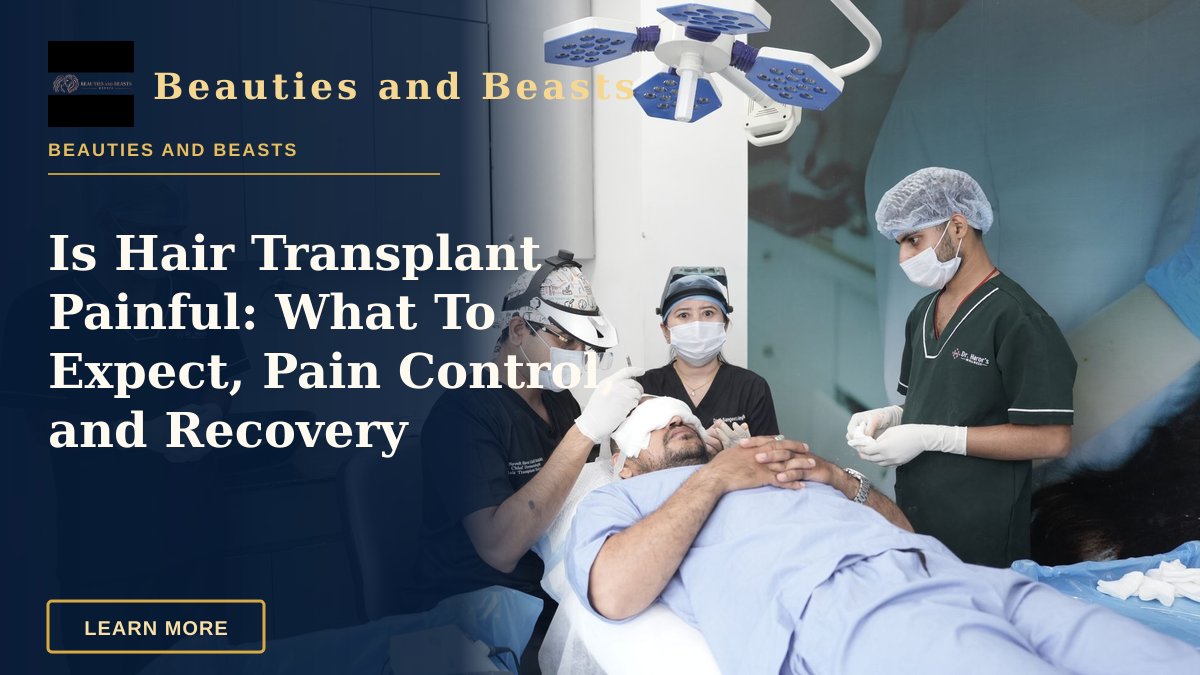
Surgical FUE involves tiny punch extractions from a donor area and precise implantation into thinning recipient sites. Under local anesthesia, patients typically don’t feel sharp pain during the procedure but will feel pressure or mild tugging. Post‑op tenderness at donor and recipient sites is common for a few days, and careful aftercare reduces risk of pain‑related complications.
Non‑surgical approaches, including InFuze TED acoustic therapy, produce almost no procedural pain and have minimal downtime—these are attractive for patients who prioritize comfort and rapid return to normal activities. PRF microneedling occupies a middle ground: it involves transient pinprick sensation during treatment and mild soreness afterward but can accelerate healing when combined appropriately with other modalities.
If you want to compare surgical options or review patient experiences, our FUE information page outlines candidacy and technique; for an external perspective on FUE surgical programs in Denver, see FUEsion Hair Clinics - Denver.
See how we can help you
Get Started TodayConclusion
Is hair transplant painful? For most people, the answer is: not during the procedure, and only mildly afterward. Local anesthesia and refined surgical technique make modern FUE tolerable for the majority of patients, while noninvasive acoustic options (InFuze TED) and regenerative adjuncts (PRF, MSC Exosomes) provide lower‑discomfort alternatives or complementary therapies. Postoperative soreness usually peaks in the first 48–72 hours and is manageable with standard analgesia and careful aftercare.
Choosing the right pathway begins with an informed consultation that considers anatomy, goals, timeline, and pain tolerance. At our Ken Caryl clinic we pair objective diagnostics (FlowMediQ), surgical FUE expertise, regenerative scalp protocols, and noninvasive options so you can pick a plan that balances comfort with outcomes. If you’re curious about surgical candidacy, noninvasive approaches, or how PRF may change your recovery experience, the next best step is a no‑cost consultation.
Primary next step: schedule a complimentary consultation or an AI pre‑scan so we can map your scalp and propose a pain‑managed plan tailored to your goals. Book now via our online portal or call (303) 933‑8526.
FAQ
- Will I be awake during a hair transplant?
- Yes. FUE is typically performed with local anesthesia so you remain awake but numb in the treatment areas. Sedation or anxiolytics can be arranged for comfort if needed.
- How long does the soreness last?
- Most patients report the worst soreness in the first 48–72 hours, with steady improvement over the following week. By two weeks most routine activities are comfortable though the scalp continues internal healing for weeks to months.
- Are there ways to reduce pain before the procedure?
- Yes. Follow pre‑op instructions, avoid blood‑thinning supplements (as advised), and discuss anxiolytics or mild sedatives with your provider. Using a staged or combined approach (noninvasive first, surgical later) can also minimize overall procedural discomfort.
- Is noninvasive hair regrowth painful?
- Noninvasive therapies such as InFuze TED are designed to be low‑discomfort—many patients report feeling only warmth or vibration and return to normal activities immediately.
Locations & Access
We are a single, full‑service Ken Caryl / Littleton clinic serving the southwest Denver metro area. Our aim is to make access simple whether you prefer an in‑person visit or an AI‑assisted pre‑scan to start the conversation.
Clinic address and contact details are listed below. If you can’t visit right away, we offer remote FlowMediQ AI pre‑scans and complimentary consultations to jump‑start planning.
- Clinic address — 10354 W. Chatfield Ave, Suite 203, Littleton, CO 80127
- Phone — (303) 933‑8526
- Email — [email protected]
- Hours — Mon–Fri: 9:00 AM – 5:00 PM; Sat: By Appointment Only; Sun: Closed
Booking & contact: call or use our Contact page to request appointments, pre‑visit forms, or financing information. If you prefer to begin remotely, request a FlowMediQ AI Facial Analysis pre‑scan and we’ll follow up with a complimentary plan and timeline.
Serving area: Ken Caryl, Littleton, and the southwest Denver metro area. We strive to provide clear pre/post instructions and routine follow‑up so you feel supported at every step.
Next Step
Locations & Access
Discover how our team can help you take the next step with confidence.
Contact UsMedical Information Disclaimer
This content is provided for general educational purposes only. It is not a substitute for professional advice, diagnosis, or treatment. Readers are advised to consult qualified professionals for personalized recommendations.
Have questions? We have answers.
Speak With an Expert